Safety Suggestions and Guidance
Boating & Recreational Fishing Activities (Bay & Offshore)
Issued: 23 June 2026
Contents
- Purpose
- Trailer Boats – Travel, Launching and Retrieval
- Boating Safety on the Water
- Offshore & Bar Crossing Safety
- Weather Awareness & Trip Planning
- Recreational Fishing Safety
- Heat, Sun & Outdoor Exposure
- Gas, Fuel & BBQ Safety
- Final Notes & Responsibilities
1. Purpose
Provide MBFG members with clear, practical safety guidance to reduce incidents while boating and fishing in Moreton Bay and offshore waters.
Key Risks Identified
- Towing and launch incidents
- Changing weather and sea conditions
- Equipment failure or lack of preparedness
- Offshore hazards (bar crossings, isolation)
- Hook injuries and deck-related hazards
- Heat, dehydration and sun exposure
- Fire/explosion risks from fuel and gas
Critical Safety Controls (Non-Negotiable)
- Conduct a pre-trip safety check every trip
- Always carry mandatory safety equipment and know how to use it
- Check weather, tides and warnings before departure
- Wear lifejackets when conditions require or risk increases
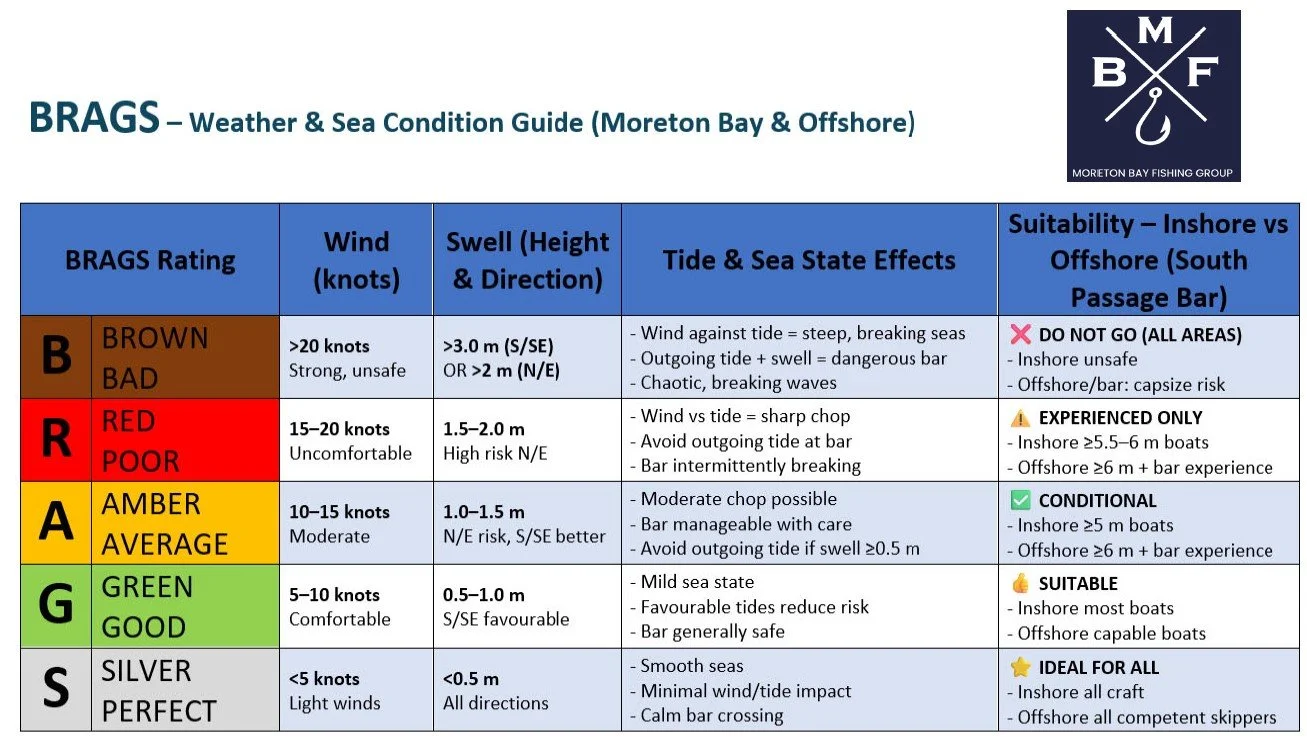
- Avoid offshore travel in winds >15 knots or unsafe swell conditions
- Never boat under the influence of alcohol or drugs
- Fish with at least one other person and ideally another club boat nearby
Opportunity for Members
- Safer trips = more enjoyable experiences
- Improved coordination between club members enhances safety offshore
- Sharing learnings builds overall group capability
2. Trailer Boats – Travel, Launching and Retrieval
Hazards
- Trailer sway, detachment, or load shift during travel
- Slips, trips and vehicle collisions at busy ramps
- Vessel movement during launching/retrieval
Safety Controls
- Inspect tow vehicle, lights, brakes, tyres and tie-downs before travel
- Secure boat and equipment in line with load restraint guidance
- Use a spotter when reversing or launching
- Prepare vessel away from ramp (plugs in, gear loaded)
- Maintain clear communication and patience at busy ramps
Risks / Opportunities
- Risk: Ramp congestion increases collision likelihood
- Opportunity: Efficient preparation reduces stress and delays for all users
3. Boating Safety on the Water
Hazards
- Collision with vessels or submerged objects or whales
- Falling overboard
- Equipment failure or lack of safety gear
- Poor decision-making due to fatigue or alcohol
Safety Controls
- Comply with the General Safety Obligation (MSQ)
- Carry and maintain required safety equipment (e.g. lifejackets, signalling devices)
- Ensure all occupants know emergency procedures and location of safety equipment
- Log on/off with Coastguard or VMR
- Keep a proper lookout at all times
- Avoid alcohol/drugs while operating vessels
- Assign roles (skipper, lookout, radio operator)
Risks / Opportunities
- Risk: Unfamiliar crew may not respond correctly in emergencies
- Opportunity: Brief crew before departure to improve response capability
4. Offshore & Bar Crossing Safety
Hazards
- Rough seas, breaking waves and strong currents at bars
- Rapid weather changes offshore
- Engine failure leading to drift
- Isolation from assistance
Safety Controls
- Do not cross bars unless experienced and conditions are suitable
- Avoid crossings in swell >1.5 m or on outgoing tide
- Avoid offshore trips in winds >15 knots
- Log on/off with Coastguard or VMR at commencement of trip and for bar crossings
- Travel with another vessel when possible
- Carry drogue/parachute anchor and minimum 30 m tow rope
- Maintain reliable communication (VHF radio preferred)
Risks / Opportunities
- Risk: Bar crossings present one of the highest incident risks
- Opportunity: Coordinated club trips improve offshore safety
5. Weather Awareness & Trip Planning
Hazards
- Sudden storms, wind changes or reduced visibility
- Strong currents and tidal impacts
Safety Controls
- Check BOM forecasts, MSQ warnings and Notices to Mariners before departure
- Monitor weather throughout the trip
- Plan return times conservatively and advise someone of your destination and return time
- Identify safe shelter locations in advance
Risks / Opportunities
- Risk: Conditions can deteriorate faster than expected
- Opportunity: Good planning enables early decision-making and safer returns
6. Recreational Fishing Safety
Hazards
- Hook injuries and line entanglement
- Slippery decks and sharp equipment
- Handling fish with spines or teeth
- Non-compliance with fishing regulations
Safety Controls
- Use protective gloves and pliers when handling fish/hooks
- Keep decks tidy and free of loose gear
- Maintain safe casting distances between anglers
- Follow Queensland fishing rules and limits
- Store knives and hooks safely when not in use
Risks / Opportunities
- Risk: Minor injuries are common but preventable
- Opportunity: Safer handling improves fishing efficiency and enjoyment
7. Heat, Sun & Outdoor Exposure
Hazards
- Heat exhaustion or heat stroke
- Sunburn and long-term UV exposure
- Dehydration
Safety Controls
- Wear long sleeves, hats and sunglasses
- Apply and reapply SPF 50+ sunscreen
- Drink water regularly (not just when thirsty)
- Create shade where possible
- Schedule rest breaks, particularly in summer
Risks / Opportunities
- Risk: Heat-related illness can escalate quickly offshore
- Opportunity: Good hydration improves alertness and decision-making
8. Gas, Fuel & BBQ Safety
Hazards
- Fuel vapours and fire/explosion risk
- Gas leaks or poorly stored LPG cylinders
- Burns from cooking equipment / BBQs
Safety Controls
- Check for fuel leaks or odours before starting engine
- Store petrol cans and LPG cylinders upright, secured and ventilated
- Inspect hoses, seals and connections regularly
- Operate BBQs away from flammable materials and enclosed spaces
- Turn off gas supply when not in use
Risks / Opportunities
- Risk: Fuel vapours can ignite unexpectedly
- Opportunity: Routine checks significantly reduce fire risk
9. Final Notes & Responsibilities
- Safety is a shared responsibility across all MBFG members; advice is available to less experienced members
- Skippers are responsible for their vessel safety and onboard decisions
- Crew should actively support safe practices and speak up if concerned
- Always refer to official Queensland (MSQ, BOM, QLD Govt) sources for current requirements
- Treat every trip as a planned and managed activity – not casual or routine
Quick Reference – Before You Go
- Check weather, tides and warnings
- Inspect boat, trailer and safety gear
- Log your trip (especially offshore)
- Brief your crew
- Carry sufficient fuel, water and communication
This safety notice is intended to support MBFG members in making informed, practical decisions to ensure safe and enjoyable fishing experiences across Moreton Bay and offshore waters.
10. MBFG Trip Weather and Sea Condition BRAGS rating chart